

 By
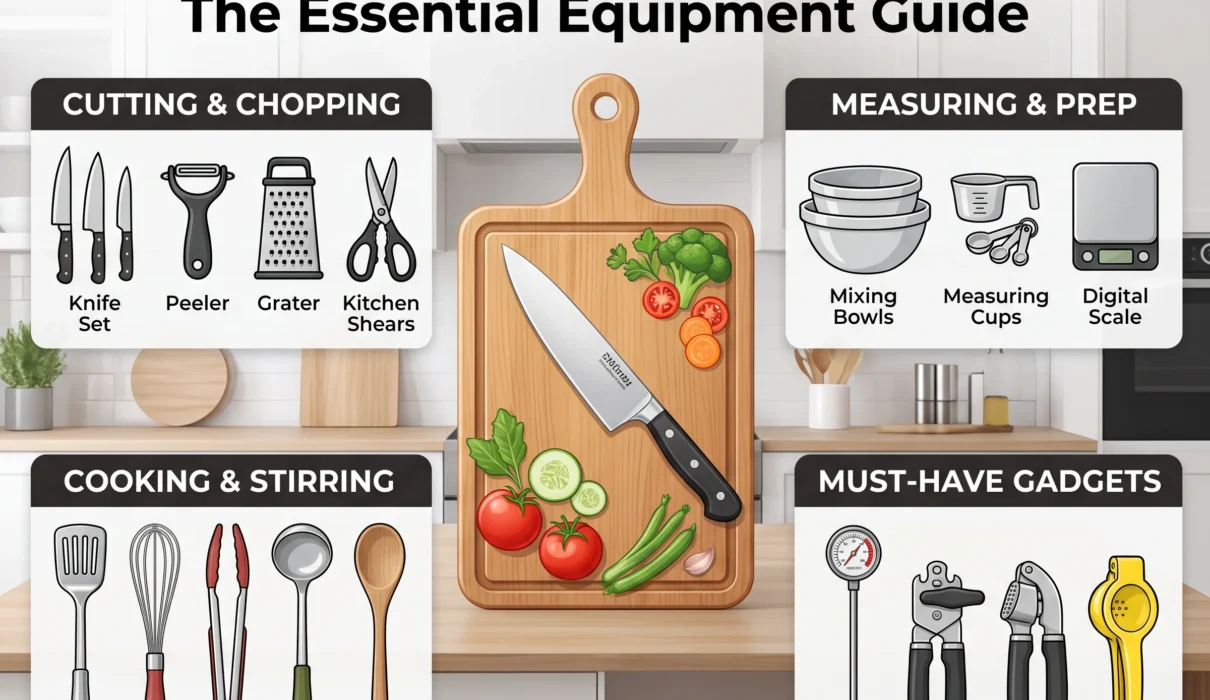
By Equipping a home kitchen does not require purchasing every specialized gadget on the market. In reality, crowded countertops and overflowing utensil crocks stuffed with single-purpose tools often create friction rather than culinary freedom. Professional chefs and experienced home cooks rely on a core set of durable, high-performing kitchen tools that execute hundreds of culinary techniques with precision.
Choosing the right cooking tools comes down to material science, ergonomics, heat transfer, and maintenance requirements. An ultra-sharp knife, a stable cutting surface, and heavy-gauge cookware can transform everyday cooking from a frustrating chore into an intuitive, enjoyable craft.
Whether you are setting up your first home kitchen from scratch or purging dull, warped utensils to streamline your space, this comprehensive guide covers the essential kitchen tools worth owning, how to evaluate quality, and how to maintain your kitchen equipment for decades of daily service.
1. The Core Cutlery Trinity: Knives That Do 95% of Kitchen Work
Marketing campaigns frequently suggest that home cooks need 18-piece knife blocks. In practical, daily cooking, three specific blades handle virtually every prep task.
THE ESSENTIAL CUTLERY HIERARCHY:

[ 8-Inch Chef's Knife or Gyuto ]  --->  Dicing, mincing, slicing, heavy prep (80% of tasks)
                 │
[ Serrated Bread Knife ]          --->  Crusty artisan loaves, ripe tomatoes, delicate cakes
                 │
[ 3.5 to 4-Inch Paring Knife ]    --->  Peeling, coring, trimming, precise detailed handheld work
The 8-Inch Chef’s Knife (The Workhorse)
The 8-inch chef’s knife is the single most vital piece of culinary equipment you will ever buy. It serves as an extension of your forearm.
- Western vs. Japanese Blades: Traditional German/Western chef’s knives (such as Wüsthof or Zwilling) are forged from softer, tougher high-carbon stainless steel (56–58 HRC) with a curved belly suited for a rhythmic rocking motion. Japanese knives (Gyuto or Santoku) use harder, thinner steel (60–62+ HRC) ground to an acute 12-to-15-degree angle, designed for push-cutting and paper-thin vegetable slices.
- Full Tang Construction: Look for blades where the steel extends in a single solid piece through the entire length of the handle. Full-tang knives offer superior balance, structural integrity, and durability under pressure.
- The Pinch Grip Test: When holding the knife, your thumb and index finger should grip the base of the blade (the bolster/choil) directly, while your remaining fingers wrap around the handle. If the knife feels excessively front-heavy or handle-heavy in this position, it will cause wrist fatigue during lengthy prep sessions.
The Serrated Bread Knife (10-Inch Offset)
A long, serrated knife acts like a miniature saw. The pointed scalloped teeth puncture firm crusts, thick melon rinds, and delicate tomato skins without applying downward crushing pressure. Opt for a 9-to-10-inch blade with an offset handle, which gives your knuckles clearance above the cutting board.
The 3.5-Inch Paring Knife
Designed for handheld tasks off the board: trimming artichoke hearts, coring strawberries, peeling apples, segmenting citrus, and deveining shrimp. A simple, stamped paring knife with an ergonomic, textured poly handle is often preferable to heavy forged alternatives because lightness enhances manual dexterity.
2. Cutting Surfaces: The Foundation of Prep
Using an exceptional knife on a poor cutting board ruins the blade’s edge within days. Glass, marble, ceramic, and bamboo boards are notorious for dulling fine steel.
| Material | Edge Retention | Sanitation / Cleaning | Durability | Best Application |
| End-Grain Hardwood (Maple/Walnut) | Outstanding (Gently yields to blade) | Hand-wash only; requires monthly mineral oil | Decades if conditioned | Daily vegetable, fruit, and cooked meat slicing |
| High-Density Polyethylene (HDPE) | Moderate | Dishwasher safe; bleach sanitizable | 3–5 years (grooves trap bacteria over time) | Raw poultry, seafood, and high-stain foods |
| Wood Composite (Richlite) | Good | Dishwasher safe; highly sanitary | 10+ years | Compact prep, tight spaces, quick daily cutting |
| Bamboo | Poor (High silica dulls edges) | Hand-wash only | 2–4 years | Serving platters and charcuterie only |
Why End-Grain Wood Reigns Supreme
In end-grain cutting boards, the wood fibers stand vertically, like the bristles of a paintbrush. When a sharp knife strikes the board, the blade slips between the fibers rather than severing them. When lifted, the fibers close back up. This self-healing property prevents micro-grooves from trapping food particles and keeps your knife sharp two to three times longer than synthetic boards.
Preventing Board Slippage
A sliding cutting board is a primary kitchen hazard. Never work on a board that shifts under pressure. Place a damp paper towel or a cut square of rubberized mesh drawer liner directly underneath the board to lock it securely to the countertop.
3. Foundational Cookware: The Essential Vessel Quartet
You do not need a 14-piece matching cookware set. Commercial cookware manufacturers often bundle non-essential sizes to inflate set prices. Instead, build a versatile four-piece arsenal using materials matched to their specific thermodynamic strengths:
THERMODYNAMIC APPLICATION MATRIX:

[ Tri-Ply Stainless Steel Skillet ]  ---> Rapid responsiveness, fond development, pan sauces
                 │
[ Enameled Cast Iron Dutch Oven ]    ---> High thermal retention, braising, soups, baking bread
                 │
[ Seasoned Raw Cast Iron Skillet ]   ---> High-heat searing, smashburgers, cornbread, roasting
                 │
[ Hard-Anodized or Ceramic Non-Stick]---> Gentle delicate proteins, crepes, omelets, scrambled eggs
1. 12-Inch Tri-Ply Stainless Steel Skillet
Stainless steel is the ultimate pan for everyday searing, sautéing, and deglazing.
- Why Fully Clad Matters: Inexpensive pans feature an aluminum disc welded only to the base, which creates scorching hot spots where the bottom meets the sidewalls. Fully clad pans sandwich an aluminum or copper core continuously between layers of stainless steel from the base all the way up the flared rims.
- Building Flavor Through Fond: Stainless steel allows meat and vegetables to stick lightly during cooking, forming a golden-brown residue (fond). Deglazing this fond with wine, stock, or vinegar produces restaurant-grade pan sauces.
2. 5.5-to-6-Quart Enameled Cast Iron Dutch Oven
A heavy, lidded Dutch oven is the most versatile slow-cooking vessel in existence.
- Thermal Momentum: The dense iron walls absorb and radiate steady, indirect heat, preventing scorch marks during long, multi-hour stews and braises.
- Baking Vessel: Preheated inside a 500°F (260°C) oven, a Dutch oven traps steam escaping from raw dough, producing blistered, bakery-quality artisan bread crusts.
- Enamel Protection: The vitrified porcelain enamel interior resists acidic tomatoes, wines, and citrus, eliminating the metallic reaction issues of unseasoned cast iron.
3. 10-Inch or 12-Inch Bare Cast Iron Skillet
Cast iron takes longer to heat than stainless steel, but once saturated, it retains heat exceptionally well. Dropping a thick ribeye steak or cold pork chop into a screaming-hot cast iron skillet causes almost no temperature drop, ensuring a dark, caramelized crust without overcooking the interior.
4. 10-Inch Dedicated Non-Stick Pan
Do not spend hundreds of dollars on premium non-stick pans. Even with careful handling, PTFE and ceramic non-stick coatings degrade over 2 to 4 years of regular thermal cycling. Treat a 10-inch non-stick skillet as a semi-consumable tool reserved exclusively for gentle tasks: French omelets, fried eggs, delicate white fish fillets, and crepes. Avoid high heat and metal utensils to preserve the non-stick surface.
4. Hand Tools and Utensils: The Precision Enablers
Small hand utensils bridge the gap between your hands and the hot pan. Investing in commercial-grade utensils prevents melted silicone, snapped handles, and scratched pans.
+------------------------------+---------------------------+------------------------------------+
| Essential Hand Tool          | Distinct Advantage        | Why Cheap Versions Fail            |
+------------------------------+---------------------------+------------------------------------+
| **Fish Spatula (Pellet)**    | Flexible, thin spring steel| Stiff, thick plastic spatulas push |
|                              | slips easily under food   | food around and tear delicate skin |
+------------------------------+---------------------------+------------------------------------+
| **Locking Tongs (12-Inch)**  | Heat-resistant grip, acts | Weak hinge springs pinch skin or   |
|                              | like heatproof fingers    | lock up unintentionally            |
+------------------------------+---------------------------+------------------------------------+
| **Flat-Edged Wooden Spoon**  | Scrapes flat pan corners  | Round spoons miss the corner crease|
|                              | without scratching metal  | where fond burns                   |
+------------------------------+---------------------------+------------------------------------+
| **Seamless Silicone Spatula**| Heat-safe to 500°F (260°C)| Two-piece handles trap food slime  |
|                              | completely scrapes bowls  | and harbor hidden mold             |
+------------------------------+---------------------------+------------------------------------+
| **Y-Shaped Vegetable Peeler**| High leverage, razor thin | Swivel peelers dull rapidly and    |
|                              | carbon steel blade        | skip over bumpy roots              |
+------------------------------+---------------------------+------------------------------------+
| **Microplane Rasp Grater**   | Photochemically etched;   | Punched metal box graters smash and|
|                              | shears zest and hard cheese| tear instead of shaving            |
+------------------------------+---------------------------+------------------------------------+
The Unmatched Versatility of the Fish Spatula
Despite its name, a metal fish spatula (pelletier) is not just for seafood. Crafted from high-flex spring steel with wide, angled slots, it slides effortlessly beneath over-easy eggs, roasted sheet-pan vegetables, smashburgers, and warm cookies. Its sharp, beveled leading edge can easily scrape pan fond or chop ground meat right in the skillet.
Locking Stainless Steel Tongs
Choose commercial 12-inch scalloped tongs with a heavy spring and a pull-tab locking mechanism. Avoid silicone-tipped tongs for high-heat searing, as thick silicone tips lack the fine tactile control needed to pluck, flip, and manipulate ingredients precisely.
Microplane Rasp Graters
A classic photochemically etched stainless steel rasp grater transforms prep:
- Citrus Zest: It shaves away fragrant citrus oils without catching the bitter white pith underneath.
- Garlic and Ginger: Purees cloves and roots into an instant paste without the need for a mortar and pestle or garlic press.
- Finishing Cheeses: Converts hard Parmigiano-Reggiano into an airy cloud that melts instantly over hot pasta or pizza.
5. Measurement and Thermal Control: Removing the Guesswork
Cooking relies on chemical reactions governed by two primary variables: exact mass and temperature. Relying on visual intuition or volume approximations introduces inconsistent results.
THE ACCURACY STACK:

[ Digital Instant-Read Probe ]  ---> Measures internal meat/bread core temp in < 2 seconds
                ▲
                │
[ Digital Kitchen Scale ]       ---> Accurately measures ingredients to the gram (bypasses cup volume errors)
                ▲
                │
[ Stainless Measuring Spoons ]  ---> Calibrated volume for liquids, spices, and baking leaveners
The Digital Instant-Read Thermometer
Color is an unreliable indicator of meat doneness. Cooking chicken breasts, pork loins, or medium-rare steaks to safe, juicy targets requires a digital instant-read thermometer with a thermocouple or thermistor sensor. A quality digital probe reads internal core temperatures within 1 to 2 seconds with an accuracy of ±0.5°F (0.3°C), preventing dry, overcooked poultry and underdone roasts.
The Digital Kitchen Scale
Measuring by volume (cups) is inherently flawed because dry goods compress. A cup of flour can weigh anywhere from 120 grams to 160 grams depending on how it was scooped. A flat digital scale accurate to 1 gram (with a tare function) ensures reliable baking, repeatable sourdough hydration, and precise coffee-to-water ratios.
6. How to Choose and Evaluate Kitchen Equipment
Before purchasing any piece of kitchen hardware, apply the Four-Pillar Evaluation Framework:
- Utility Density (Multi-Use vs. Unitaskers): Does this tool perform several foundational kitchen tasks, or does it consume counter space for a single, rarely made recipe? Unless you prepare avocados or hard-boiled eggs every morning, avoid unitasker tools like dedicated avocado slicers, egg cookers, and strawberry hullers.
- Thermal Conductivity and Gauge: When evaluating cookware, check the metal thickness. Ultra-thin metal pans buckle under high heat and create hot spots that scorch ingredients. Heavy-gauge tri-ply stainless steel, cast iron, and heavy carbon steel distribute heat evenly and resist warping.
- Ergonomic Safety and Balance: A tool should feel comfortable in hand during repetitive tasks. Check handles for secure rivets, smooth transitions, and non-slip surfaces. Avoid handles with hollow plastic parts or sharp, uncomfortable edges.
- Maintenance Complexity: Are you prepared to hand-wash and condition wood boards or season raw cast iron? If your routine relies on high-temp dishwashing, choose commercial-grade polyethylene boards, stainless steel utensils, and dishwasher-safe clad cookware.
7. The Tiered Master Kitchen Equipment Checklist
Use this tiered checklist to build your kitchen setup without purchasing unnecessary clutter:
TIER 1: THE NON-NEGOTIABLE FOUNDATIONS (Start Here)
□ 8-Inch Chef's Knife (German or Japanese high-carbon steel)
□ Large End-Grain Wood Cutting Board (or heavy HDPE synthetic board)
□ 12-Inch Tri-Ply Clad Stainless Steel Skillet
□ 12-Inch Spring Steel Fish Spatula
□ 12-Inch Stainless Steel Locking Tongs
□ Digital Instant-Read Probe Thermometer
□ Digital Kitchen Scale (1g resolution)

TIER 2: THE VERSATILE WORKHORSES (Add Next)
□ 5.5-to-6-Quart Enameled Cast Iron Dutch Oven
□ 10-Inch Cast Iron Skillet
□ 10-Inch Offset Serrated Bread Knife
□ 3.5-Inch Paring Knife
□ Two Heavy-Duty Aluminum Half-Sheet Pans with Wire Racks
□ Microplane Rasp Grater
□ Seamless Heat-Resistant Silicone Spatula
□ Fine-Mesh Stainless Steel Sieve / Strainer

TIER 3: PRECISION SPECIALISTS (For Advanced Cooking)
□ Immersion Hand Blender (for quick soups, purees, and emulsified dressings)
□ 14-Inch Carbon Steel Wok
□ 4-Quart Sauté Pan with Straight Sides and Lid
□ Mandoline Slicer with Cut-Resistant Safety Glove
□ Mortar and Pestle (Granite)
Long-Term Maintenance: Making Tools Last a Lifetime
High-quality kitchen equipment is an investment. Proper maintenance ensures it performs reliably for decades:
- Knife Care: Never run fine cutlery through a dishwasher. The harsh alkaline detergents, abrasive salts, and vibrating rack collisions chip thin edges and degrade handles. Hand-wash knives immediately after use with warm, soapy water, dry thoroughly with a towel, and hone regularly on a ceramic rod to re-align the microscopic edge.
- Conditioning Wood: When wooden boards and spoons appear dry or turn light gray, apply food-grade mineral oil or beeswax board cream. Hydrating the wood prevents warping, drying, and moisture absorption from raw foods.
- Pan Care: Allow hot pans to cool before submerging them in cold sink water; sudden thermal shock can warp stainless steel bases and crack cast-iron enamel. Use barkeepers friend (oxalic acid) to dissolve heat tints, polymerized oil streaks, and mineral deposits on stainless steel without scratching the finish.
Investing in durable, well-designed core tools simplifies every step of cooking. By choosing versatile equipment and maintaining it properly, your kitchen becomes an efficient, reliable workspace that elevates every meal you make.