


 By
By The dreaded 6:00 PM question—“What’s for dinner?”—is responsible for more wasted money, unnecessary stress, and emergency takeout orders than almost any other daily friction point. When you return home exhausted from a full workday, your cognitive capacity for deciding on recipes, auditing the refrigerator, chopping produce, and waiting for an oven to preheat is virtually zero.
That breakdown is rarely due to a lack of cooking ability. It happens because of an absence of system architecture.
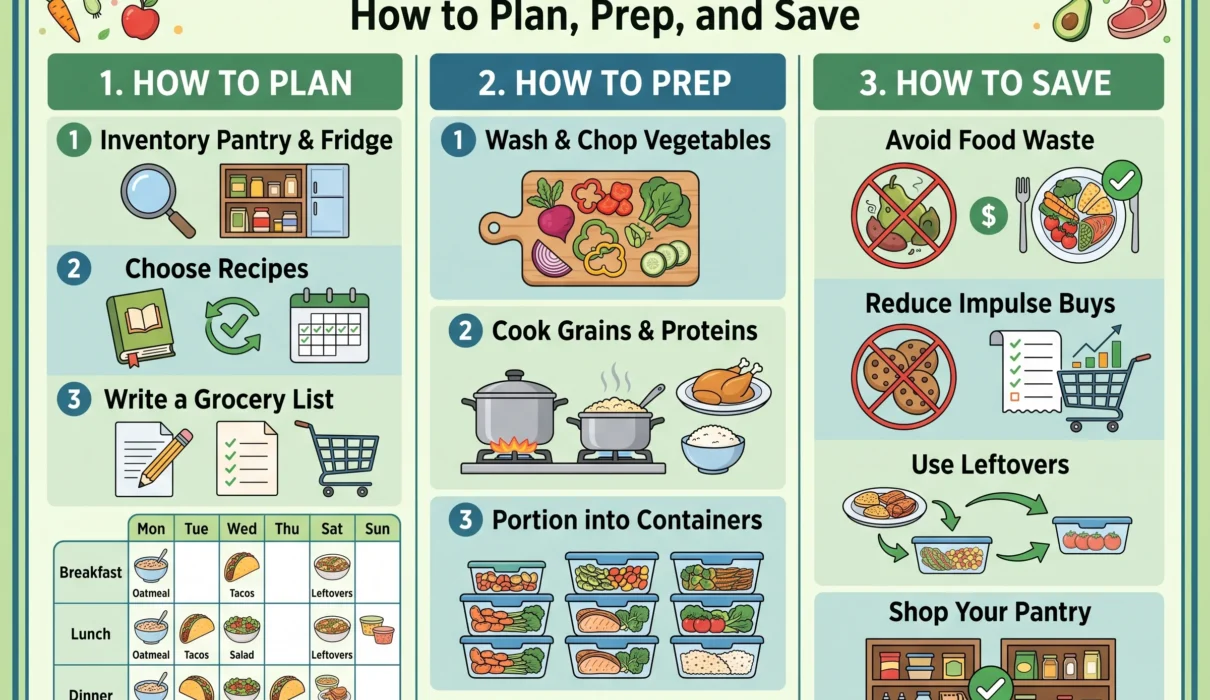
Learning effective meal planning does not require spending an entire Sunday locked in the kitchen packing 21 identical plastic containers. At its core, an actionable weekly meal plan is simply a tactical scheduling system: it aligns what you buy with what you eat, eliminates household food waste, lowers your grocery bill, and automates evening dinner decisions.
This comprehensive meal planning guide provides a step-by-step roadmap to assess your schedule, organize your pantry, manage smart ingredients, master low-stress meal preparation, and execute a flexible weekly routine that fits your actual lifestyle.
1. The Core Benefits: Why Build a Meal Planning Habit?
Before diving into templates and grocery lists, understanding the measurable return on your time investment helps maintain the habit when life gets chaotic.
THE MEAL PLANNING VALUE EQUATION:

  [ Financial Savings ]       Directly cuts impulse takeout ($15–$35/meal) & curbs grocery waste
           +
  [ Cognitive Freedom ]       Eliminates daily 6:00 PM decision fatigue and panic
           +
  [ Nutritional Control ]     Ensures consistent lean protein, dietary fiber, and healthy micronutrients
           +
  [ Time Reclamation ]        Reduces daily prep time from 60 minutes to 15–20 minutes
- Significant Cost Reduction: The average household discards roughly 20% to 30% of the edible groceries it purchases. Buying produce without a predetermined recipe is effectively throwing money straight into the compost bin.
- Reduction of Food Waste: When every vegetable, herb bundle, and protein purchase has a scheduled cooking day, fresh ingredients get consumed before spoiling.
- Nutritional Alignment: When hunger hits at maximum fatigue, the brain naturally craves hyper-palatable, calorie-dense foods high in refined sugars and saturated fats. A pre-planned meal removes friction, keeping your nutritional goals on track.
- Consolidated Grocery Shopping: Instead of stopping at the grocery store three to four times a week for single missing items, you execute one streamlined shopping trip based on an audited checklist.
2. Choosing Your Meal Planning Methodology
One of the most frequent reasons beginners abandon meal planning within two weeks is choosing a method that clashes with their lifestyle. There are four distinct meal planning models—select the one that matches your weekly routine:
| Method | How It Works | Ideal For | Common Pitfall |
| Traditional Batch Cooking | Cook large batches of 2–3 complete meals on Sunday; portion and store | Long-hour professionals, solo eaters, rigid routines | Menu fatigue by Thursday; texture degradation |
| Component Prep (Modular) | Roast 2 sheet pans of veg, 1 batch of grains, 2 proteins; mix and match | Busy families, intuitive eaters, macro trackers | Forgetting sauces/dressings, making meals feel dry |
| Theme-Night Scheduling | Assign recurring culinary themes (e.g., Taco Tuesday, Pasta Thursday) | Beginners, parents cooking for diverse palates | Boredom if themes aren’t refreshed with new recipes |
| Pantry-First Planning | Audit what is already expiring; build meals around existing staples | Budget-conscious households, grocery savers | Requires higher comfort with recipe improvisation |
3. Step 1: The Schedule Audit and Caloric Reality Check
Never begin your meal planning by browsing Pinterest or Instagram for ambitious gourmet recipes. Begin by reviewing your calendar.
CALENDAR AUDIT MATRIX:

[ Monday ]      Late work meeting until 6:30 PM  ---> 15-Minute Sheet Pan or Leftovers
[ Tuesday ]     Gym after work, home by 7:15 PM  ---> Slow Cooker (Ready on arrival)
[ Wednesday ]   Normal evening, open schedule    ---> Full Stovetop Cooking (30–40 Mins)
[ Thursday ]    Kids' soccer practice at 6:00 PM ---> Quick Wraps / Assemble from Prepped Fridge Items
[ Friday ]      Social night / weekend unwind    ---> Pizza Night or Intentional Dining Out
The 4 Questions to Ask Before Planning:
- Which nights am I actually home and energized to cook? If Tuesday involves kids’ sports or late project deadlines, schedule a 10-minute assembly meal or prepped leftovers—not a 45-minute recipe with multiple pans.
- How many lunches do I genuinely need? If your office has catered lunches on Wednesdays or you enjoy lunch with colleagues twice a month, do not prep five lunch bowls. You will end up tossing two on Friday afternoon.
- What is already lingering in the fridge that will spoil by Wednesday? Leafy greens, fresh berries, opened yogurts, and raw proteins must take priority on Monday and Tuesday.
- Where can intentional leftovers do double duty? Cooking a double batch of grilled lemon chicken breasts on Monday provides effortless, sliced protein for Tuesday’s Mediterranean grain bowls.
4. Step 2: The Pantry and Refrigerator Audit
Shopping without auditing what you already own is the leading cause of cluttered pantries and food waste. Before drafting a single recipe, perform a quick 5-minute survey across three zones:
Zone A: The Perishables Bin (Eat First)
- Unopened greens, bags of carrots, peppers with slight wrinkling
- Thawed chicken, fish, or beef nearing their “use-by” dates
- Opened jars of dairy, sour cream, salsa, or fresh stocks
Zone B: The Working Freezer
- Frozen proteins (shrimp, ground turkey, chicken cutlets)
- Half-used bags of frozen vegetables (peas, corn, broccoli)
- Portions of previously frozen chili, soup, or bolognese sauce
Zone C: The Dry Pantry
- Grains and legumes: Jasmine rice, quinoa, dry lentils, canned chickpeas, black beans
- Pastas and noodles: Rigatoni, soba, rice noodles
- Canned goods: Whole peeled San Marzano tomatoes, coconut milk, tuna
- Flavor builders: Olive oil, tamari, curry pastes, vinegars, dried herbs
THE PANTRY INTEGRATION FORMULA:
Take 2 items from the Perishables Bin (e.g., baby spinach, bell pepper)
             +
Take 1 protein from the Freezer (e.g., frozen chicken breast)
             +
Take 1 carb from the Dry Pantry (e.g., jasmine rice or pasta)
             =
Your baseline dinner recipe for Monday night without buying new staples.
5. Step 3: Designing a Balanced Weekly Menu
A successful weekly menu balances comfort, prep efficiency, and nutritional value. The simplest way to structure satisfying weeknight meals is using the Anchor Formula:
                  THE NUTRITIONAL ANCHOR TRIANGLE
                                /\
                               /  \
                              /    \
         PROTEIN             /------\          VEGETABLE / FIBER
         (25g - 40g)        /        \         (2 Handfuls)
         Chicken, salmon,  /          \        Broccoli, asparagus,
         tofu, beef, eggs /____________\       spinach, peppers, kale
                          COMPLEX CARB
                          (1 Fist-Sized Serving)
                          Sweet potato, quinoa,
                          brown rice, whole-grain pasta
The 5-Day Real-World Beginner Menu Template
This framework keeps active kitchen prep low by pairing hands-on cooking nights with leftover or quick-assembly nights:
- Monday (Fresh Cook – Big Batch): Sheet Pan Paprika Chicken Thighs with Roasted Sweet Potatoes & Broccoli Florets. (Cook double portions of chicken and potatoes).
- Tuesday (Assembly / 10-Minute Repurpose): Warm Harvest Bowls. Shred Monday’s leftover chicken over warm sweet potatoes, fresh baby spinach, crumbled goat cheese, and a quick Dijon vinaigrette.
- Wednesday (High-Speed Skillet): 20-Minute Ground Turkey and Snap Pea Ginger Stir-Fry. Cooked in one skillet and served over pantry jasmine rice.
- Thursday (Pantry & Freezer Cleanout): One-Pot Creamy Tomato, White Bean, and Spinach Skillet. Canned cannellini beans simmered with crushed tomatoes, garlic, Italian seasoning, and wilted greens, served with toasted sourdough.
- Friday (Casual / Low Effort): Homemade Naan Flatbread Pizzas. Prepared using store-bought garlic naan, jarred tomato sauce, shredded mozzarella, and vegetable odds-and-ends from the vegetable crisper.
- Saturday & Sunday (Flexible / Social): Reserved for dining out, family gatherings, or an enjoyable longer culinary project (like homemade artisan pizza or slow-simmered bolognese).
6. Step 4: The Ingredient Cross-Utilization Strategy
A common mistake in beginner meal planning is picking five unique recipes from five different cookbooks, each demanding individual, specialized ingredients.
By Friday, you find yourself with 4 tablespoons of buttermilk left in a quart carton, half an open bunch of cilantro, half a jar of hoisin sauce, and a withered head of red cabbage.
The Power of Cross-Utilization
Limit your weekly fresh produce purchases to 3 or 4 versatile vegetables and 2 primary proteins that easily cross over between varied culinary traditions:
+---------------------+-------------------------------+------------------------------------+
| Versatile Staple    | Meal #1 Application           | Meal #2 Application                |
+---------------------+-------------------------------+------------------------------------+
| **Baby Spinach**    | Folded raw into Monday's bowl | Wilted into Thursday's bean skillet|
+---------------------+-------------------------------+------------------------------------+
| **Bell Peppers**    | Sliced thin for Wed. stir-fry | Diced on Friday's naan pizzas      |
+---------------------+-------------------------------+------------------------------------+
| **Boneless Thighs** | Roasted for Monday's sheet pan| Shredded into Tuesday's lunch wrap |
+---------------------+-------------------------------+------------------------------------+
| **Greek Yogurt**    | Breakfast parfaits with oats  | Base for garlic dressing on bowls  |
+---------------------+-------------------------------+------------------------------------+
By engineering overlap, you empty your produce bins completely by the weekend, reduce total grocery costs by 20% to 30%, and carry zero spoiled items into the following week.
7. Step 5: Engineering an Organized Grocery List
Never write a grocery list in random order of thought. Wandering across store aisles to locate ingredients wastes time, increases mental fatigue, and heightens the temptation to grab impulse snacks.
Organize your grocery list into functional zones that reflect the physical layout of modern supermarkets:
THE AISLE-ALIGNED SHOPPING BLUEPRINT:

[ PRODUCE ]
• 1 Container Baby Spinach (16 oz)
• 3 Bell Peppers (assorted colors)
• 2 Crowns Fresh Broccoli
• 1 Bunch Fresh Cilantro
• 1 Bag Honeycrisp Apples

[ MEAT & SEAFOOD ]
• 2.5 lbs Boneless Skinless Chicken Thighs
• 1 lb 93/7 Lean Ground Turkey
• 1 lb Raw Peeled Shrimp (Frozen or Fresh)

[ DAIRY & REFRIGERATED ]
• 1 Tub Whole Milk Plain Greek Yogurt (32 oz)
• 1 Block Sharp Cheddar Cheese (8 oz)
• 1 Dozen Large Pasture-Raised Eggs

[ DRY PANTRY & BULK ]
• 1 Bag Jasmine Rice (2 lbs)
• 2 Cans Cannellini White Beans (15 oz)
• 1 Can Crushed San Marzano Tomatoes (28 oz)
• 1 Pack Whole Wheat or Naan Flatbreads

[ CONDIMENTS & SPICES ]
• Low-Sodium Tamari / Soy Sauce
• Dijon Mustard
• Raw Honey
Pro Grocery Habits:
- Shop with a Full Stomach: Shopping while hungry reliably spikes impulse spending on high-sugar, pre-packaged snack foods.
- Stick to the Perimeter First: Most supermarkets locate whole, minimally processed ingredients (produce, fresh meat, dairy) around the perimeter walls, while shelf-stable ultra-processed items occupy the center aisles.
- Embrace Online Grocery Pickup: If you struggle with impulse purchases in person, utilize curbside store pickup. Building your digital shopping cart against your printed meal plan ensures you only buy what is on the list, often saving $40 to $75 per trip.
8. Practical Meal Preparation: The 60-Minute “Power Hour”
You do not need to spend four hours cooking complete casseroles every Sunday afternoon. A focused, 60-minute prep sprint handles the tedious tasks so weeknight cooking takes under 15 minutes.
1.Preheat, Clean, and Setup Station :Minutes 0:00 to 0:10.
Clear countertops and empty your dishwasher. Set out a stable cutting board, a sharp chef’s knife, two baking sheets lined with parchment paper, and your glass storage containers. Preheat the oven to 400°F (200°C).
2.The High-Volume Roast and Grain Simmer :Minutes 0:10 to 0:25.
Chop hearty vegetables (broccoli florets, carrots, sweet potatoes). Toss with olive oil, salt, and pepper; spread evenly across sheet pans and place in the hot oven for 25 minutes. Simultaneously, combine 1 cup of jasmine rice or farro with water in a medium saucepan on the stovetop, bring to a boil, cover, and drop to a simmer.
3.Chop Perishable Aromatics and Wash Greens :Minutes 0:25 to 0:45.
While veggies roast and grains simmer, chop your aromatics: dice onions, mince garlic cloves, and slice bell peppers. Store in airtight glass containers. Wash and spin dry hearty leafy greens so they are ready for quick assembly.
4.Mix Two Multi-Use Sauces :Minutes 0:45 to 0:55.
Whisk together two versatile dressings: a zesty lemon-Dijon vinaigrette and a creamy sesame-tamari sauce. Having high-flavor sauces in squeeze bottles or mason jars in the fridge transforms plain grains and proteins into vibrant, restaurant-quality bowls.
5.Pack, Cool, Label, and Store :Minutes 0:55 to 1:00.
Pull the roasted vegetables and cooked grains from the heat. Allow them to vent steam for 10 minutes so condensation doesn’t make them soggy. Transfer to airtight containers, refrigerate, and admire your prepared foundations.
9. Food Safety, Storage, and Container Essentials
Proper food storage protects your ingredient investment and prevents early spoilage or foodborne illness.
+-----------------------------+---------------------+------------------------------------+
| Ingredient / Prepared Item  | Refrigerator Shelf  | Optimal Storage Technique          |
+-----------------------------+---------------------+------------------------------------+
| **Cooked Poultry & Beef**   | 3 to 4 Days Max     | Airtight glass meal prep containers|
+-----------------------------+---------------------+------------------------------------+
| **Cooked Rice & Quinoa**    | 4 to 5 Days Max     | Cool quickly; store tightly sealed |
+-----------------------------+---------------------+------------------------------------+
| **Fresh Leafy Greens**      | 7 to 10 Days        | Enclose with a dry paper towel     |
+-----------------------------+---------------------+------------------------------------+
| **Hard Root Vegetables**    | 2 to 3 Weeks        | Cool, dark pantry bin (not fridge) |
+-----------------------------+---------------------+------------------------------------+
| **Fresh Delicate Herbs**    | 10 to 14 Days       | Trim stems, store in water like flowers |
+-----------------------------+---------------------+------------------------------------+
The Container Strategy: Glass vs. Plastic
- Glass Storage (Borosilicate): The gold standard for home meal prep. Glass containers can move directly from freezer to microwave or oven without leaching microplastics, warping, or absorbing tomato and oil stains.
- Plastic Deli Containers: Excellent, budget-friendly options for holding chopped raw vegetables, prepped aromatics, and mixed dressings. They stack uniformly and save significant shelf space.
- The Paper Towel Trick for Greens: Humidity is the enemy of fresh greens. Place a dry sheet of paper towel inside clamshells or bags of spinach and arugula; it absorbs excess condensation, keeping leaves crisp for up to two weeks.
10. Troubleshooting: What to Do When the Plan Derails
No matter how thoroughly you plan, life happens. Unexpected late meetings, flat tires, or intense cravings for takeout will occur. The secret to sustainable meal planning is building in flexibility rather than abandoning the system.
Build an “Emergency Buffer Night”
Never plan seven home-cooked dinners for seven nights. Plan for four to five meals maximum. Leave one night dedicated to clearing out collected refrigerator leftovers, and one night completely open for dining out or ordering takeout guilt-free.
Keep a “Zero-Effort Pantry Emergency Backup”
Always maintain ingredients for two 5-minute backup meals that require no fresh groceries:
- The Pantry Pasta: Dried spaghetti, a jar of quality marinara, and a can of tuna or frozen meatballs.
- The Crispy Quesadilla: Shelf-stable corn tortillas, canned black beans, jarred salsa, and shredded cheese.
When an exhausting day derails your dinner plans, you can assemble a nourishing meal in 5 minutes without spending $40 on food delivery.
A 3-Step Action Plan to Start This Week
- Conduct a 5-Minute Inventory Tonight: Open your refrigerator and pantry. Identify three ingredients that need to be eaten immediately.
- Plan Only 3 Dinners for the Upcoming Week: Do not attempt a 7-day culinary marathon. Pick three simple recipes using overlapping produce.
- Draft an Aisle-Aligned List: Write down your ingredients categorized by store section, buy only those items, and execute one 45-minute prep session.
Meal planning is a skill that compounds over time. By aligning your recipes with your actual schedule, mastering the art of ingredient cross-utilization, and building modular foundations, you reclaim your evenings, save thousands of dollars annually, and make home cooking an effortless part of your life.
