


 By
By The global culinary universe is undergoing an unprecedented renaissance. The ways we source, cook, plate, and conceptualize nourishment are evolving at breakneck speed. Today’s major food trends transcend short-lived social media gimmicks; they signal a fundamental paradigm shift in ecological consciousness, sensory exploration, biophilic nutrition, and culinary technology.
From ancient fermentation traditions revived with precision biotechnology to hyper-regional heritage ingredients crossing borders, the latest food trends are redefining our plates. Navigating contemporary gastronomy requires examining the intersection of regenerative agriculture, ancestral flavors, computational cooking, and shifting human values.
This comprehensive guide explores the defining food industry trends and groundbreaking culinary trends shaping dining rooms, home kitchens, and food tech labs around the globe.
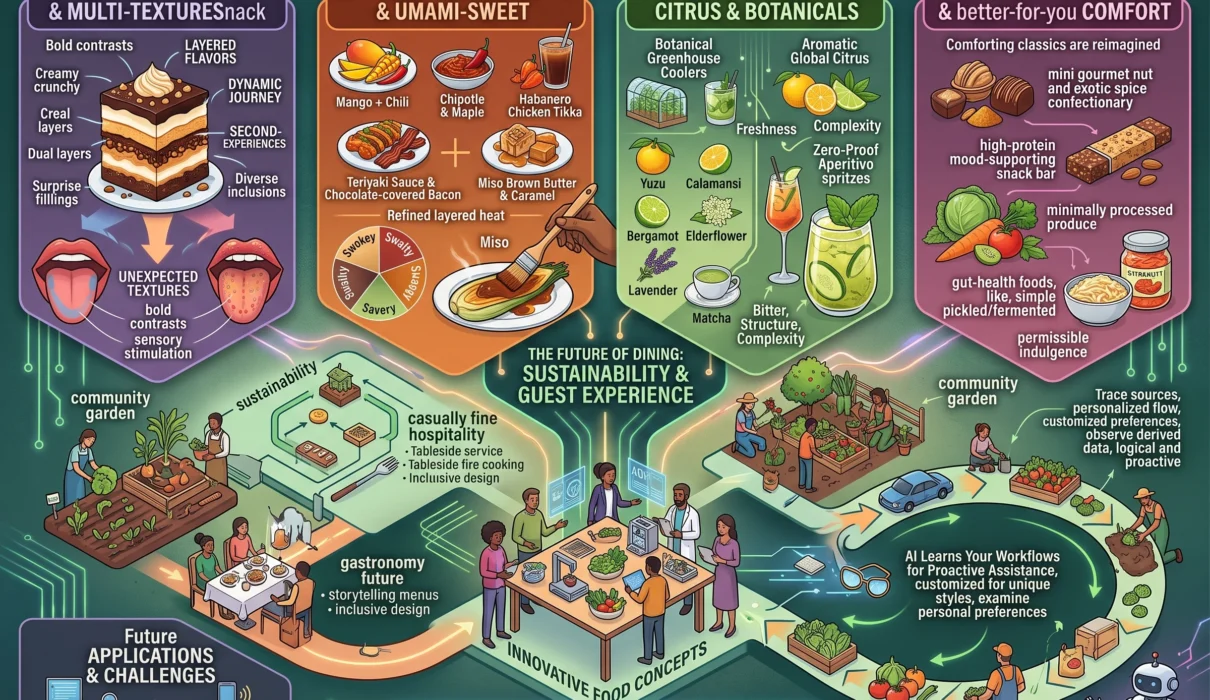
Contemporary dining balances innovative culinary techniques with natural, sustainable ingredients.. Source : ICCA Dubai
1. Macro Shifts: What Is Driving Modern Food Trends?
Every major movement in gastronomy stems from cultural and ecological catalysts. The modern dining landscape is governed by four systemic drivers:
- Climate-First Sourcing and Regenerative Agronomy: Conscious consumers no longer settle for the ambiguous label of “sustainability.” The priority has shifted toward regenerative practices—systems that actively rebuild topsoil, sequester atmospheric carbon, restore watershed balance, and safeguard biodiversity.
- The “Food as Medicine” Convergence: Functional nutrition has graduated from niche health food stores into fine-dining tasting menus and casual fast-casual chains. Consumers demand biological optimization, targeting metabolic resilience, gut microbiome diversity, and neuroprotective cognition through daily meals.
- Radical Regional Authenticity: Monolithic culinary categories like “Asian food,” “Latin food,” or “Middle Eastern cuisine” are obsolete. Diners now celebrate hyper-localized heritage cooking—distinguishing Oaxacan coastal seafood from Yucatecan pit-barbecue, or tracing Sichuan peppercorns to specific mountain valleys.
- Computational Gastronomy and Supply Automation: Artificial intelligence, cellular agriculture, and closed-loop indoor farming systems have transitioned from speculative venture capital experiments into daily commercial food production.
2. Emerging Ingredients: The New Palette of Global Flavors
Chefs, product developers, and home cooks are broadening their ingredient arsenals, prioritizing biological diversity, climate resilience, and layered sensory impact.
THE INGREDIENT SPECTRUM:
[ Ocean Greens & Microalgae ]  ---> Dulse, Kelp, Spirulina, Sea Grapes
             │
[ Heritage Grains & Pulses ]   ---> Fonio, Kernza, Tepary Beans, Buckwheat
             │
[ Complex Botanical Acids ]    ---> Calamansi, Yuzu, Verjus, Black Limes
             │
[ Sub-Regional Aromatics ]     ---> Sichuan Sansho, Grains of Paradise, Makhana
Climate-Resilient Super-Crops: Fonio, Kernza, and Millet
Monoculture crops like industrial wheat, corn, and soy strip soil nutrients and demand unsustainable irrigation. In response, modern kitchens are turning to hardy ancestral grains:
- Fonio: Cultivated across West Africa for over 5,000 years, this drought-resistant, gluten-free ancient grain matures in just six to eight weeks. It thrives in arid soils without chemical pesticides. Featuring an earthy, nutty flavor profile reminiscent of couscous, fonio is quickly becoming a staple in grain bowls, risottos, and gluten-free baking flours.
- Kernza: A perennial grain developed by the Land Institute, Kernza features root systems extending up to 10 feet deep into the subsoil. These deep roots prevent erosion, sequester carbon year-round, and produce a grain rich in protein and dietary fiber with distinct sweet, grassy, and hazelnut notes.
- Millets: From finger millet (ragi) to pearl and foxtail millet, these drought-tolerant grains are replacing polished white rice in savory pilafs, extruded pastas, and fermented beverages.
Marine Greens and Coastal Sea Agriculture
The future of sustainable biomass is undeniably aquatic. Ocean crops require zero freshwater, zero arable land, and zero synthetic fertilizers while filtering marine ecosystems:
- Atlantic Sugar Kelp and Bull Kelp: Beyond traditional dashi broths, kelp is being transformed into kelp-based noodles, plant-based bacon alternatives, and mineral-rich finishing salts. Its high concentration of natural glutamates provides profound savory umami without industrial additives.
- Sea Grapes (Caulerpa lentillifera): Also known as “green caviar,” these delicate ocean succulents pop on the tongue with a refreshing, saline burst, making them a popular garnish in modern raw bars.
- Spirulina and Chlorella Extracts: Clean, photobioreactor-grown microalgae provide concentrated vegan omega-3s, vibrant natural green and cyan pigmentation, and clean plant protein for dressings, broths, and smoothies.
+------------------------+-------------------------------+----------------------------------------+
| Emerging Ingredient    | Flavor Profile                | Culinary Application                   |
+------------------------+-------------------------------+----------------------------------------+
| **Black Limes (Loomi)**| Musky, fermented, citrus-sour | Braised meats, dry rubs, compound butters|
+------------------------+-------------------------------+----------------------------------------+
| **Calamansi**          | Tart mandarin-lime hybrid     | Ceviches, pan sauces, non-alcoholic drinks|
+------------------------+-------------------------------+----------------------------------------+
| **Koji-Inoculated Fats**| Deep umami, nutty, savory    | Steak basting, plant-based charcuterie |
+------------------------+-------------------------------+----------------------------------------+
| **Tepary Beans**       | Rich, dense, buttery-earthy   | Plant-forward stews, purées, cassoulets|
+------------------------+-------------------------------+----------------------------------------+
Complex, Layered Acidity
The culinary world has moved past one-dimensional distilled vinegars and basic lemons. Today’s menus explore nuanced botanical acids:
- Fermented Citrus and Loomi: Sun-dried Oman black limes bring a smoky, fermented tang to rich braises, stews, and roasted root vegetables.
- Verjus: The pressed juice of unripened wine grapes provides a delicate, wine-friendly acid that brightens sauces without clashing with sommelier pairings.
- Yuzu, Sudachi, and Calamansi: Southeast Asian and Japanese citrus fruits are taking center stage, offering floral, bitter, and sweet aromas that elevate dressings, crudos, and pastry components.
3. Cooking Techniques: The Intersection of Ancient Fermentation and High Tech
Modern culinary technique is defined by a fascinating paradox: the simultaneous revival of stone-age preservation methods alongside aerospace-grade thermal technology.
ANCIENT TRADITIONS                    MODERN REFINEMENTS
Open-Fire Embers, Hearth Cooking  <---> Controlled Airflow, Multi-Tiered Grates
Koji Inoculation & Garum Ferment  <---> Ultrasonic Extraction, Thermal Immersion
Clay Amphorae & Underground Pits  <---> Automated Humidity Incubators & Centrifuges
Advanced Koji Alchemy and Upcycled Garums
The mold Aspergillus oryzae (koji)—historically responsible for miso, soy sauce, and sake—has become the premier creative tool in modern restaurant kitchens.
Chefs are no longer limiting koji to barley and soybeans. By inoculating cooked grains and applying koji’s powerful protease and amylase enzymes to alternative substrates, kitchens are crafting extraordinary culinary bases:
- Bread Amino Pastes: Transforming surplus stale bread and croissants into deeply savory, miso-like seasoning pastes, turning bakery waste into culinary gold.
- Meat and Seafood Garums: Inspired by ancient Roman fish sauces and modernized through Nordic fermentation science, chefs combine roasted beef bones, chicken wings, or squid scraps with koji, water, and salt. Held in precision incubation chambers at 140°F (60°C) for several weeks, enzymes rapidly digest proteins into crystal-clear, glutamate-rich liquid seasonings that deliver intense umami.
Live-Fire Cooking and Primal Hearth Craft
Even as kitchens adopt automated induction technology, the primeval allure of wood smoke remains unmatched. However, today’s live-fire cooking is not simple backyard grilling; it is an exercise in thermodynamic precision.
- Multi-Tiered Adjustable Hearths: Custom-fabricated grills allow chefs to manage micro-climates of radiant heat, elevating whole vegetables and proteins several feet above white-hot fruitwood embers for gentle, low-temperature smoking over 12 to 14 hours.
- Direct Ash Roasting: Vegetables like parsnips, celeriac, and winter squashes are buried directly into smoldering hardwood coals. The exterior chars to a protective husk while the interior steams in its own concentrated juices, yielding silky, intensely caramelized flesh.
- Infused Fat-Dripping: Animal fats, bone marrow, and herb bundles are suspended above open flames, continuously basting roasting produce below with seasoned, smoky lipids.
Sonic Emulsification and Centrifugal Clarification
In avant-garde and high-volume kitchens alike, scientific laboratory equipment is becoming standard kitchen kit:
- Ultrasonic Homogenizers: Ultrasonic sound waves cavitate liquids, creating micro-emulsions of oil and water that remain completely stable without the use of chemical emulsifiers or egg yolks.
- Benchtop Centrifuges: Spinning purees, broths, and juices at 4,000+ times the force of gravity separates dense solids from crystal-clear, intensely flavored aromatic liquids, producing translucent herb oils and clarified tomato waters.
4. The Transformation of Dining Experiences
Consumer definitions of an exceptional night out have shifted radically. Traditional, hushed fine-dining rooms with stiff white tablecloths and four-hour marathons are declining in favor of intimate, experiential, and culturally resonant formats.
+-----------------------------------+-----------------------------------+------------------------------------+
| Dining Model                      | Core Philosophy                   | Guest Experience                   |
+-----------------------------------+-----------------------------------+------------------------------------+
| **Micro-Omakase & Counter Dining**| Intimacy, culinary storytelling,  | 8–12 seats, direct chef engagement,|
|                                   | ingredient transparency           | unscripted single-seating menus    |
+-----------------------------------+-----------------------------------+------------------------------------+
| **Casualized "Hi-Fi" Bistros**    | Audiophile sound systems, natural | High-energy, neighborhood-focused, |
|                                   | wines, elevated small plates      | exceptional acoustics and lighting |
+-----------------------------------+-----------------------------------+------------------------------------+
| **Third-Place Culinary Hubs**     | Community, hybrid retail/dining,  | Daytime bakeries and specialty delis|
|                                   | circular food culture             | transitioning to evening wine bars |
+-----------------------------------+-----------------------------------+------------------------------------+
The Rise of Non-Japanese Counter Omakase
The curated, chef-led counter format pioneered by Japanese sushi masters has expanded across global cuisines:
- Mexican Antojito Omakases: Diners sit at an intimate stone counter while a chef presses heirloom masa to order on a wood-fired comal, creating a 10-course sequence of hyper-regional tacos, tetelas, and complex moles.
- Italian Pasta Counters: Guests watch extrusion, hand-shaping, and immediate boiling of fresh durum pasta ribbons, served directly from copper pans onto guests’ plates within 30 seconds of hitting al dente.
- Korean Hansik Tasting Counters: Showcasing ancestral fermentation crocks (onggi), artisanal banchan varieties, and aged kimchis alongside charcoal-grilled heritage pork.
Acoustic Architecture and Hi-Fi Vinyl Listening Bars
The modern diner values atmosphere and sonic design as much as the tasting menu. Originating in Tokyo’s vintage kissaten coffee houses and jazz bars, the Hi-Fi vinyl dining room has spread across London, New York, Paris, and Singapore.
These spaces feature acoustic wall treatments, hand-built analog tube amplifiers, and rare vinyl selections curated by resident selectors. The food matches this artisanal aesthetic: small plates, natural and biodynamic low-intervention wines, and botanical cocktails served in rooms designed specifically to eliminate abrasive clatter.
Hyper-Transparent Ingredient Storytelling
Today’s guests demand radical transparency. Chalkboards and QR-linked digital menus provide unvarnished traceability:
- Naming the independent farm, soil type, and harvest date of the heirloom carrots.
- Providing the vessel name and landing port for every catch of wild finfish.
- Documenting the fair-trade price premiums paid directly to coffee, chocolate, and spice growers in the Global South.
5. Food Technology: The Next Frontier of Sustainable Sustenance
Behind restaurant doors and retail shelves, technological revolutions are systematically rebuilding global food systems to withstand supply disruptions and environmental degradation.
THE TECH STACK:
[ Precision Fermentation ] ---> Designer proteins, animal-free casein, egg albumin
             │
[ Closed-Loop Vertical Ag] ---> Zero-pesticide hyper-local greens, ultra-low water
             │
[ Biomimetic Texturizing ] ---> Plant-based whole cuts with authentic muscle fiber grain
             │
[ Upcycled Food Systems  ] ---> Spent brewers' grains & coffee pulp upcycled to nutrition
Precision Fermentation: Brewing the Building Blocks of Nutrition
Unlike early plant-based substitutes that relied on simple soy isolates and heavy processing, precision fermentation leverages micro-organisms as miniature, highly efficient biological factories:
- Animal-Free Dairy Casein and Whey: Microbes (such as yeast and micro-fungi) are genetically programmed to brew bio-identical milk proteins through standard fermentation tanks, exactly like brewing craft beer. The result is real dairy cheese with identical stretch, melt, and aging capability, completely free from factory farming, lactose, and cholesterol.
- Precision Fats and Lipids: The primary failure of first-generation plant meats was the fat. Palm and coconut oils melt at lower temperatures, leaking out of plant-based patties early and leaving a dry, mushy texture. Cultured lipids grown from micro-algae mimic the structure and melting curves of animal tallow and lard, searing realistically and holding authentic juiciness.
Upcycling and Circular Food Tech
The food industry wastes roughly one-third of all calories produced globally. Modern engineering is capturing this lost value, transforming industrial agricultural by-products into high-value nutrition:
- Spent Grain Flour: The spent malt and barley grains discarded by craft breweries are dehydrated and milled into nutrient-dense, fiber-packed flour used in artisan sourdoughs, pastas, and baked goods.
- Cascara (Coffee Cherry Tea) and Fruit By-Products: The fleshy, antioxidant-rich fruit surrounding the coffee bean—historically dumped into waterways where it caused severe pollution—is now upcycled into carbonated botanical sodas, functional energy drinks, and natural food colorings.
- Cacao Pulp Utilization: Chocolate makers have historically used only the fermented seed, discarding the sweet, tropical white pulp that surrounds it. Innovative confectioners now reduce this pulp into a natural fruit sweetener, sweetening chocolate bars exclusively with the cacao plant itself.
6. Shifting Consumer Preferences: The Mindful Eater
Consumer psychology has matured. Diners are moving away from dogma and restriction, favoring holism, moderate indulgence, and biological vitality.
The “Sober Curious” Movement and Adult Non-Alcoholic Pairings
The market for non-alcoholic beverages has outgrown juvenile mocktails packed with sugary syrups and fruit juices. Today’s adult non-alcoholic pairings are treated with the intellectual rigor of fine wine and craft distilling:
- Botanical Distillates and Adaptogenic Spirits: Blending steam-distilled botanicals—oak wood, bitter gentian root, pine needles, and rosemary—with functional adaptogens like lion’s mane mushrooms, ashwagandha, and L-theanine to provide relaxation without neurotoxicity.
- Complex Fermented Tonics: Pairing menus now incorporate house-brewed water kefirs, sparkling single-origin teas, and floral kombuchas designed to complement specific savory courses with tannins, acids, and aromatics.
- De-Alcoholized Natural Wines: Utilizing gentle vacuum distillation or spinning-cone columns to remove ethanol while retaining fragile grape aromatics, volatile esters, and organic acids.
THE MATURATION OF PLANT-FORWARD DINING:

FROM (First-Wave Veganism):
• Heavily processed imitation meats
• High-sodium, industrial binders (methylcellulose)
• Monoculture soy and pea protein isolates
• Synthetic lab flavors designed to mimic fast food

TO (Modern Plant-Forward Cuisine):
• Celebrating whole, recognizable vegetables
• Ancient culinary techniques (charring, fermenting, braising)
• Nutrient-dense biodiversity (heirloom legumes, wild mushrooms, sea greens)
• Highlighting the natural beauty and complex flavors of produce
The Rejection of “Ultra-Processed” Labels
Shoppers are turning away from long ingredient lists packed with modified starches, synthetic gums, and chemical flavorings. The modern plant-forward diner prefers a roasted, koji-glazed maitake mushroom or a braised heirloom bean stew over an ultra-processed meat substitute. Simplicity, ingredient integrity, and culinary craftsmanship have once again become the markers of premium food.
The Sweet-Heat (“Swicy”) and Sweet-Savory Revolution
Global palates crave dynamic tension in flavor profiles:
- Hot Honeys and Chili Crisps: Infusing raw wildflower honey with habanero, calabrian chilis, or gochugaru has moved from indie pizzerias to mainstream breakfast menus, glazed chicken wings, and vanilla ice creams.
- Gochujang and Tamarind Accents: Fermented Korean chili paste (gochujang) and sweet-sour tamarind concentrates are appearing in chocolate caramels, barbecue glazes, and pastry glazes, offering deep, savory complexity that cuts through cloying sweetness.
7. How to Capitalize on Modern Food Trends: Strategic Playbook
For chefs, restaurateurs, product developers, and passionate home cooks, understanding trends is only valuable if translated into actionable execution:
- Audit Your Pantry for Biodiversity: Intentionally incorporate at least two climate-resilient grains (such as fonio, Kernza, or millet) and one marine green (such as sugar kelp or dulse) into your regular cooking rotation.
- Master the Basics of Fermentation: Build an understanding of low-risk, high-reward fermentations—lacto-fermented chilis for custom hot sauces, or cultured butter inoculated with live cultures.
- Elevate Your Non-Alcoholic Offerings: Build beverage programs that offer serious, adult flavor depth through house-brewed sparkling teas, botanical vinegars, and adaptogenic infusions.
- Prioritize Single-Origin, Transparent Sourcing: Build direct relationships with local regenerative farmers, flour millers, and sustainable fisheries. Tell their stories directly to your diners and customers.
The Horizon: What Lies Ahead
As culinary trends continue to evolve, the distinction between tradition and innovation will dissolve entirely. The kitchens that define the coming decade will not be those that simply chase novel technologies, nor those that cling to rigid classical doctrines.
The true culinary leaders will be those who honor ancestral wisdom, champion environmental regeneration, embrace the precision of modern science, and celebrate the diverse flavors of our shared planet. Dining is no longer merely an act of consumption; it has become an act of connection, celebration, and preservation.
