


 By
By The residential kitchen has undergone a profound transformation. What was historically a purely mechanical room defined by gas burners, analog dials, and passive refrigeration is now the most computationally sophisticated space in the modern home.
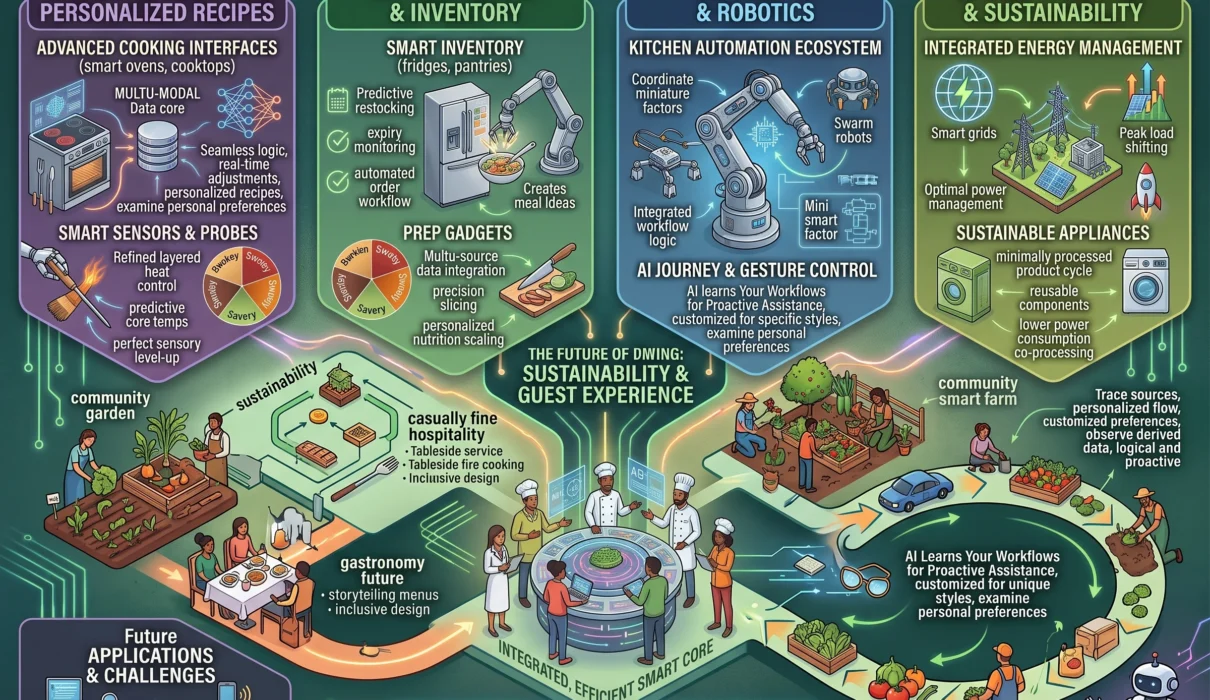
Early iterations of connected appliances were frequently dismissed as gimmicks—such as touchscreens mounted onto refrigerator doors with little practical integration. Today, smart kitchen technology has evolved into an interconnected ecosystem. Modern implementations combine embedded machine vision, automated temperature algorithms, predictive inventory systems, cross-platform standards like Matter, and grid-responsive energy monitoring.
A well-architected smart kitchen is not about introducing complexity for its own sake. It is about removing friction: eliminating culinary guesswork, preventing food spoilage, automating tedious chores, and lowering utility consumption.
Whether you are planning a full renovation or exploring targeted kitchen gadgets to modernize your workflow, this comprehensive guide covers the hardware, protocols, and practical mechanics defining the modern connected kitchen.
1. The Core Infrastructure: How a Smart Kitchen Actually Communicates
To understand connected culinary appliances, one must first examine the networking protocols that tie them together. In past years, smart appliances operated inside closed “walled gardens.” A smart range from one brand could not coordinate with an exhaust hood or dishwasher from another without juggling separate, fragmented smartphone applications.
THE CONNECTED KITCHEN PROTOCOL STACK:

[ Application Layer ]      Apple Home, Google Home, SmartThings, Home Assistant
                                         │
[ Interoperability Layer ]               ▼
                            MATTER (Standardized Appliance Commands)
                                         │
[ Network Layer ]            THREAD (Low-power mesh) / WI-FI 6 (High bandwidth)
                                         │
[ Hardware Layer ]         Smart Ranges, Ovens, Refrigerators, Sensors, Hoods
The Unification: Matter and Thread
The widespread rollout of Matter (specifically versions 1.3 and beyond, which introduced comprehensive appliance and energy management clusters) fundamentally altered kitchen automation:
- Matter: A universal open-source connectivity standard backed by the Connectivity Standards Alliance (CSA). It allows certified appliances from different manufacturers to communicate locally without routing commands through external cloud servers.
- Thread: A low-power, self-healing IPv6 wireless mesh protocol. Unlike traditional Wi-Fi, which can become congested by dozens of household smart devices, Thread-enabled sensors, micro-controllers, and switches communicate directly with adjacent nodes, extending range and eliminating single points of failure.
- Wi-Fi 6 / 6E: Reserved for high-bandwidth kitchen tasks, such as low-latency video streaming from internal oven cameras or rapid firmware updates to induction cooktop software.
Local Control vs. Cloud Dependency
The hallmark of a resilient connected kitchen is local survivability. If an internet service provider experiences an outage, a properly engineered smart oven, cooktop, or lighting array must continue to function via physical dials and local network controls. Cloud dependency is increasingly relegated to remote notifications, diagnostic telematics, and recipe database synchronization.
2. Connected Major Appliances: The Workhorses Re-Engineered
Major kitchen appliances represent substantial financial investments designed to last 10 to 15 years. Manufacturers now integrate sensors and intelligence directly into core operational components.
+------------------------+---------------------------------------+------------------------------------------+
| Appliance Type         | Primary Smart Technologies            | Practical Daily Benefit                  |
+------------------------+---------------------------------------+------------------------------------------+
| **Smart Ovens**        | Internal cameras, dual-temperature    | Eliminates guesswork; stops cooking      |
|                        | probes, computer vision recognition   | automatically when internal target hits  |
+------------------------+---------------------------------------+------------------------------------------+
| **Induction Cooktops** | Surface temperature sensors, smart pan| Prevents boiling over; holds pans at     |
|                        | telemetry, automated hood pairing     | precise degree (e.g., exactly 185°F)     |
+------------------------+---------------------------------------+------------------------------------------+
| **Smart Refrigerators**| Wide-angle cameras, expiry tracking,  | Real-time grocery auditing via phone;    |
|                        | dual compressors with AI cycling      | targeted humidity management             |
+------------------------+---------------------------------------+------------------------------------------+
| **Smart Dishwashers**  | Optical soil sensors, auto-dispense   | Optimizes water/power per load; runs     |
|                        | liquid reservoirs, off-peak cycling   | automatically during cheapest utility hrs|
+------------------------+---------------------------------------+------------------------------------------+
Smart Ovens: Precision Thermodynamics and Computer Vision
Modern smart wall ovens and ranges have advanced far beyond simple remote preheating alerts:
- In-Chamber Machine Vision: High-temperature, wide-angle interior cameras paired with edge-AI processors recognize common foods (such as a whole chicken, a sheet of chocolate chip cookies, or a loaf of sourdough). The oven identifies the dish, suggests optimal cooking curves, and streams a live feed directly to your mobile device or smart display.
- Integrated Multi-Point Probes: Wireless or hardwired smart probes communicate directly with the oven’s heating elements. Rather than cooking by arbitrary timers, the oven modulates between convection, steam, and radiant broil to bring proteins to an exact internal core temperature, automatically dropping to a warming mode the moment the target is reached.
- Combi-Steam Technology: Smart combination ovens inject calculated bursts of steam at specific stages of the bake cycle. This keeps crusts blistered on bread, prevents poultry from drying out, and reheats leftovers without altering food texture.
Smart Induction Cooktops: Precise Thermal Control
Induction is naturally the most energy-efficient cooking technology, converting roughly 85% to 90% of electromagnetic energy directly into heat inside the cookware. Smart connectivity enhances this physics advantage:
- Surface Temperature Sensors: Conventional cooktops merely regulate energy pulses (low, medium, high). Connected induction units monitor the real-time thermal state of the cookware base, adjusting wattage in real time to prevent oil from smoking or sauces from scorching.
- Cookware Telemetry: Bluetooth-connected cookware and smart probes send real-time pan temperature data back to the cooktop burner, enabling precise temperature control suitable for stovetop sous-vide, sugar tempering, and deep-frying.
- Cooktop-to-Hood Automation: Utilizing localized protocols like Bluetooth or RF links, the cooktop informs the smart range hood the instant a burner is energized. The hood automatically switches on task lighting and modulates exhaust blower CFM based on vapor, heat, and grease output.
Intelligent Refrigeration: Inventory Management and Climate Zones
Modern smart refrigerators act as kitchen command centers and active preservation hubs:
- Internal Optical Inventory: Every time the refrigerator doors close, interior wide-angle cameras capture high-resolution frames of the shelves and door bins. Home cooks can verify existing supplies from their smartphone while standing in the grocery store aisle.
- Dynamic Independent Evaporators: Smart control boards manage variable-speed inverter compressors and independent evaporators for fresh food and freezer compartments. Advanced algorithms monitor door-opening habits, ramping up cooling cycles prior to typical meal prep hours to prevent temperature fluctuations.
- Ethylene Gas Management: Smart crisper drawers monitor moisture and actively filter ethylene gas released by ripening fruits, significantly extending the lifespan of leafy greens and delicate produce.
3. Countertop Smart Cooking Devices & Kitchen Gadgets
Beyond built-in major appliances, compact smart cooking devices provide high culinary precision to home cooks without requiring a full kitchen remodel.
THE DESKTOP CULINARY ARSENAL:

[ Precision Immersion Circulators ]  ---> WiFi-guided water bath temperature control (±0.1°F)
                 │
[ Smart Countertop Ovens ]           ---> Multi-stage cooking (Air Fry -> Steam -> Sear)
                 │
[ Connected Espresso Systems ]       ---> Flow-rate profiling, gravimetric dosing, water analysis
                 │
[ Digital Kitchen Assistant Scales ] ---> Recipe auto-scaling, ingredient density compensation
Precision Immersion Circulators (Sous-Vide)
Sous-vide cooking relies on circulating a precisely heated water bath around vacuum-sealed ingredients. Smart immersion circulators incorporate Wi-Fi connectivity and guided cooking apps:
- Remote Scheduling: Users can place vacuum-sealed proteins into an ice bath before leaving for work. In the afternoon, the immersion circulator is triggered remotely via an app; the unit brings the bath to target temperature and cooks the food so it is ready upon arrival.
- Algorithmic Doneness Curves: Rather than looking up manual cooking charts, apps calculate required cooking duration based on the precise thickness, starting temperature, and target pasteurization levels of the protein.
Connected Countertop Ovens
Pioneered by brands like Breville, Anova, and June, smart countertop ovens combine convection, air frying, and steam injection inside compact footprints:
- Multi-Stage Automated Recipes: An automated program can steam a chicken breast at 212°F (100°C) until an internal probe registers 150°F (65°C), immediately transition to high-velocity convection air frying at 425°F (220°C) to crisp the skin, and shut down completely—all without user intervention.
- Food Recognition Libraries: Compact machine-vision cameras recognize frozen vs. fresh items, applying tailored heat profiles to eliminate cold, soggy centers.
Smart Espresso and Coffee Systems
Specialty coffee requires strict control of water temperature, pressure, grind size, and extraction yields:
- Gravimetric Profiling: Smart scales communicate via Bluetooth with connected grinders and espresso machines, automatically cutting off the grinder motor when a target dose (e.g., exactly 18.0 grams) is reached.
- Pressure & Flow Profiling: Connected espresso machines allow baristas to map custom pressure curves throughout the extraction cycle, optimizing flow rates to eliminate channeling and extract complex aromatic notes from light roasts.
4. Kitchen Automation and Environmental Control
A truly cohesive smart kitchen automates supporting environmental elements: task illumination, ventilation, water dispensing, and leak prevention.
+----------------------------+-----------------------------------+------------------------------------------+
| System                     | Hardware Component                | Automation Trigger                       |
+----------------------------+-----------------------------------+------------------------------------------+
| **Smart Faucets**          | Solenoid valves, capacitive bodies| Voice commands, preset volumes, proximity|
+----------------------------+-----------------------------------+------------------------------------------+
| **Adaptive Lighting**      | High-CRI Tunable White LEDs       | Circadian schedules, prep mode sensors   |
+----------------------------+-----------------------------------+------------------------------------------+
| **Air Quality & Exhaust**  | Optical PM2.5 & VOC sensors       | Elevated particulate or humidity levels  |
+----------------------------+-----------------------------------+------------------------------------------+
| **Flood Protection**       | Acoustic/conductive water pucks   | Moisture detection under sinks/dishwashers|
+----------------------------+-----------------------------------+------------------------------------------+
Voice and Sensor-Activated Water Dispensing
Smart faucets integrate voice-assistant compatibility, capacitive touch, and optical proximity sensors:
- Measured Volumetric Dispensing: Users can issue precise commands (“Dispense two and a half cups of warm water”). Solenoid valves meter the water through an internal flow meter, freeing cooks from dirtying measuring cups while kneading dough.
- Custom Temperature Presets: Define exact presets for baby formula (98.6°F / 37°C), tea brewing (195°F / 90°C), or yeast hydration (105°F / 40°C), preventing scalds and incorrect hydration temperatures.
- Hands-Free Hygiene: When hands are contaminated with raw poultry, bumping the faucet spout with a wrist or waving a hand beneath an infrared sensor starts and stops the flow, mitigating cross-contamination across fixtures.
Circadian and Task-Adaptive Illumination
Lighting dictates both kitchen safety during prep and atmosphere during meals:
- High-CRI Task Lighting: Under-cabinet LED arrays with a Color Rendering Index (CRI) of 95+ illuminate prep surfaces, allowing cooks to accurately evaluate the freshness and caramelization of ingredients.
- Automated Circadian Tuning: Connected lighting controllers shift color temperatures throughout the day: cool, energizing 5000K white light for morning prep, transitioning to warm 2700K amber lighting in the evening to wind down visual stimulation.
Air Quality Management and VOC Extraction
Cooking is one of the largest contributors to poor indoor air quality. High-heat pan searing, gas combustion, and roasting release fine particulate matter (PM2.5), nitrogen dioxide ($NO_2$), and volatile organic compounds (VOCs).
- Dedicated environmental sensors placed near cooking surfaces monitor air quality metrics in real time.
- If PM2.5 or VOC thresholds spike, the system triggers the smart range hood or whole-home ventilation system to cycle air, keeping the living environment healthy without manual intervention.
5. Energy Monitoring and Grid Integration: The Eco-Efficient Kitchen
Kitchen appliances represent a significant share of a household’s total electrical consumption. As smart electric grids, distributed solar generation, and dynamic time-of-use (TOU) tariffs become widespread, smart kitchen technology serves as a vital energy management tool.
THE MATTER ENERGY MANAGEMENT CYCLE:

[ Dynamic Utility Tariff / Solar Inverter ]
                     │
                     ▼ (Reports current rate / power availability)
       [ Smart Home Energy Manager ]
                     │
       ┌─────────────┴─────────────┐
       ▼                           ▼
[ Off-Peak / High Solar ]      [ Peak Energy Pricing ]
- Run high-draw dishwasher     - Delay wash cycle
- Pre-chill refrigerator       - Modulate compressor power
- Run self-cleaning cycle      - Throttle non-critical heating
Matter 1.3+ Energy Management Clusters
With recent updates to the Matter specification, smart appliances can report electrical consumption and respond to load-shedding signals:
- Real-Time Power Measurement: Connected appliances measure and broadcast active wattage draw and cumulative kilowatt-hour (kWh) usage over local networks.
- Power Forecast Reporting: An intelligent dishwasher or oven can broadcast its projected power requirements for a requested cycle to a central home energy management system (HEMS).
- Constraint-Based Adjustment: If household electricity prices spike during peak demand hours (typically 4:00 PM to 9:00 PM), the energy management system signals connected dishwashers to delay cycle starts until off-peak overnight rates take effect.
Lowering Standby Power (“Vampire Draw”)
Modern connected appliances often include microcontrollers, Wi-Fi chips, and displays that consume constant standby electricity. Energy Star-certified connected hardware utilizes ultra-low-power sleep modes on Thread radios, keeping quiescent power consumption below 1 watt when inactive.
6. Emerging Technologies: What the Next Era Holds
Smart kitchen technology continues to evolve rapidly. Several emerging systems are moving from advanced research labs into consumer production:
1. Solid-State Microwave and RF Cooking
Traditional microwaves rely on a cavity magnetron—a vacuum tube that generates uneven electromagnetic waves, resulting in hot spots and rubbery textures. Solid-state radio frequency (RF) cooking replaces the magnetron with semiconductor amplifiers:
- These devices control phase, frequency, and power output in real time.
- The oven detects precisely where energy is being absorbed, targeting frozen sections of food while preventing cooked edges from overheating.
2. Embedded AI Vision and Autonomous Recipe Adaptation
Next-generation kitchen assistants use multimodal language models (LLMs) and computer vision to manage complex tasks:
- Real-Time Cooking Guidance: Rather than following a static text recipe, an in-oven camera evaluates browning rates and automatically adjusts temperature and air speed to hit target results.
- Waste-Reduction Meal Synthesis: Refrigerator vision models evaluate open containers and expiring vegetables, instantly generating custom dinner recipes designed specifically to use up on-hand items.
3. Assistive Kitchen Robotics
While full humanoid robotic chefs remain complex for domestic settings, dedicated kitchen automation is becoming practical:
- Automated Stirring and Dispensing: Built-in induction appliances with motorized arms automate continuous whisking and stirring for delicate sauces, polenta, and confectionery.
- Motorized Cabinetry: Motion-activated upper cabinets lower within easy reach of wheelchair users or individuals with limited mobility, broadening accessibility through responsive hardware.
7. Security, Privacy, and Practical Buying Advice
Introducing internet-connected devices into the home introduces genuine considerations regarding cybersecurity and product longevity.
+------------------------------+---------------------------+------------------------------------+
| Risk Factor                  | Vulnerability             | Mitigation Strategy                |
+------------------------------+---------------------------+------------------------------------+
| **Network Security**         | Insecure IoT firmware     | Place smart appliances on an       |
|                              | exploited by botnets      | isolated 2.4GHz Guest or IoT VLAN  |
+------------------------------+---------------------------+------------------------------------+
| **Privacy & Data Harvest**   | In-kitchen cameras and    | Review privacy policies; opt out of|
|                              | microphones transmitting  | telemetry sharing and marketing data|
+------------------------------+---------------------------+------------------------------------+
| **Software Obsolescence**    | Manufacturer stops app    | Demand physical, fully functional  |
|                              | maintenance after 5 years | manual controls as a purchase base |
+------------------------------+---------------------------+------------------------------------+
The “Dumb First, Smart Second” Principle
When shopping for major appliances, prioritize mechanical build quality, thermal performance, compressor reliability, and serviceability above digital features:
- Never buy an appliance that requires an app for core functionality. If a smart oven cannot be turned on, set to 350°F, and timed using its physical knobs or panel during an internet outage, avoid it.
- Isolate Your IoT Network: Configure your home Wi-Fi router with a dedicated, isolated Virtual Local Area Network (VLAN) or Guest Network for smart kitchen gadgets. This prevents a compromised micro-controller on a cheap gadget from accessing personal computers or sensitive network storage.
- Verify Manufacturer Firmware Commitments: Check how long the brand commits to providing security patches and software support. Established brands with Matter certification offer greater longevity than proprietary, closed-source startups.
The Connected Kitchen in Perspective
The true value of smart kitchen technology is not found in complex gadgets or flashy novelty features. It is realized when thoughtfully selected tools work quietly in the background: an induction burner that prevents a sauce from burning, an oven camera that alerts you the moment bread reaches golden perfection, a dishwasher that runs when clean solar energy is abundant, and a faucet that dispenses exact measurements with a simple gesture.
By designing your kitchen around interoperable standards, prioritizing manual usability, and deploying technology that solves genuine daily frustrations, you can build a modern cooking space that is more efficient, sustainable, and enjoyable to cook in.
